 Sendai Day Trips
Home › Guides › Sendai Day Trips in Winter: Snow Monsters, Ginzan and Yamadera
Sendai Day Trips in Winter: Snow Monsters, Ginzan and Yamadera
Sendai in winter works best from late December to February, when the Zao snow monsters reach full size, Ginzan Onsen sits under deep snow and Matsushima's oyster shacks are open. It is the base most visitors use, because every major winter day trip in Miyagi and Yamagata starts from the city.
Quick answer The short answer on Sendai in winter
Late December to February is the prime window for Sendai in winter. The Zao soft rime, called snow monsters, can grow to 5 meters at peak season, Matsushima oyster shacks run until mid March and the city lights stay on along Jozenji-dori Avenue.
Key takeaways
- Ride the Zao Snow Monster Tour from Sendai: Night Cruiser with Hotel for the peak rime season.
- Soak in a snowbound valley on the Ginzan Onsen Day Trip From Sendai: Tohoku Highlights Tour.
- Walk the snow-dusted temple path with a Yamadera Private Tour: Licensed Guide from Sendai.
- Compare every option on the day trips from Sendai page before you pick.
When is the best time for day trips from Sendai in winter?
Late January and February give the deepest snow, and the biggest snow monsters in the mountains.
Each month of the Sendai winter has a different draw. Some trips need full snow cover, others run fine before the deep cold arrives.
Month by month in the Sendai winter
The city itself stays busy and lit all season. The mountain trips depend on snow depth, so they reward the later months. Ginzan Onsen is at its most atmospheric under snow, and the soft rime on Zao builds through the season. Here is how the winter splits up.
A down jacket and heat-tech layers are the packing baseline for any month you choose.
| Period | Best for | Watch out for |
|---|---|---|
| Early to mid December | Illuminations switch on along Jozenji-dori Avenue with some 400,000 lights, and Matsushima oyster shacks are in full swing | Snow monsters and deep mountain snow are not reliable yet |
| Late December | Ski season starts, Izumigatake Ski Resort usually opens late December with wide beginner slopes | Short days, sunset well before dinner time |
| January | Soft rime builds on the Zao range, Dontosai fire festival at Osaki Hachimangu Shrine, SENDAI Bright-Nights STORY begins mid-month | The coldest stretch, icy paths on temple climbs |
| February | Peak snow monsters, peak Ginzan snow, Bright-Nights continues | Mountain roads and closures can follow heavy falls |
| Early to mid March | Oyster shacks still open, thinner crowds | Soft rime season winds down as temperatures rise |
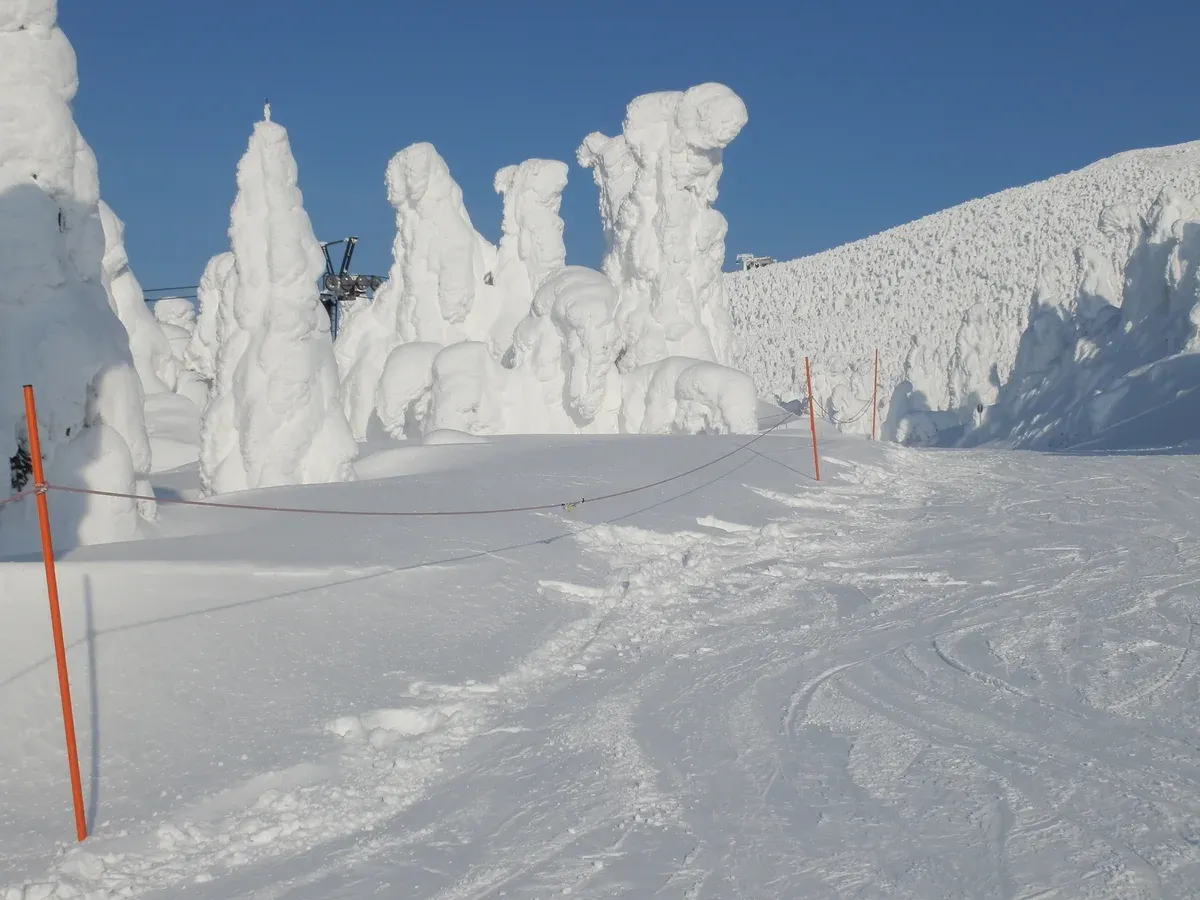
Ice-coated trees on the slopes above Zao Onsen. Photo: yuukokukirei, CC BY 3.0, via Wikimedia Commons
What are the Zao snow monsters and when should you see them?
The Zao snow monsters, called juhyo, are trees coated in soft rime that can grow to 5 meters at peak season, and January into February is the time to see them.
The snow monsters are the headline act of a Sendai winter and the reason many travellers come north at all.
How the snow monsters form
Soft rime forms when supercooled cloud and wind hit the conifers of the Zao mountain range at temperatures of 0°C or lower. Layer builds on layer until the trees become white figures, described by the Zao resort as a natural art rare even worldwide. At peak season the figures can reach 5 meters.
The easiest way into the heart of the rime forest is from Zao Onsen, where the Zao Ropeway runs in winter. Guided options run the gamut from a heated snowmobile at Sumikawa Snow Park, the Wild Monster, with an exclusive guide, to full-day private trips from Sendai.
If you want a driver and no transport planning, the Zao Snow Monsters Private Tour from Sendai covers the mountain with a private car.
Source: Zao Onsen Tourism Association.
Tours That Fit
Winter-ready departures from Sendai to the mountain and temple highlights.
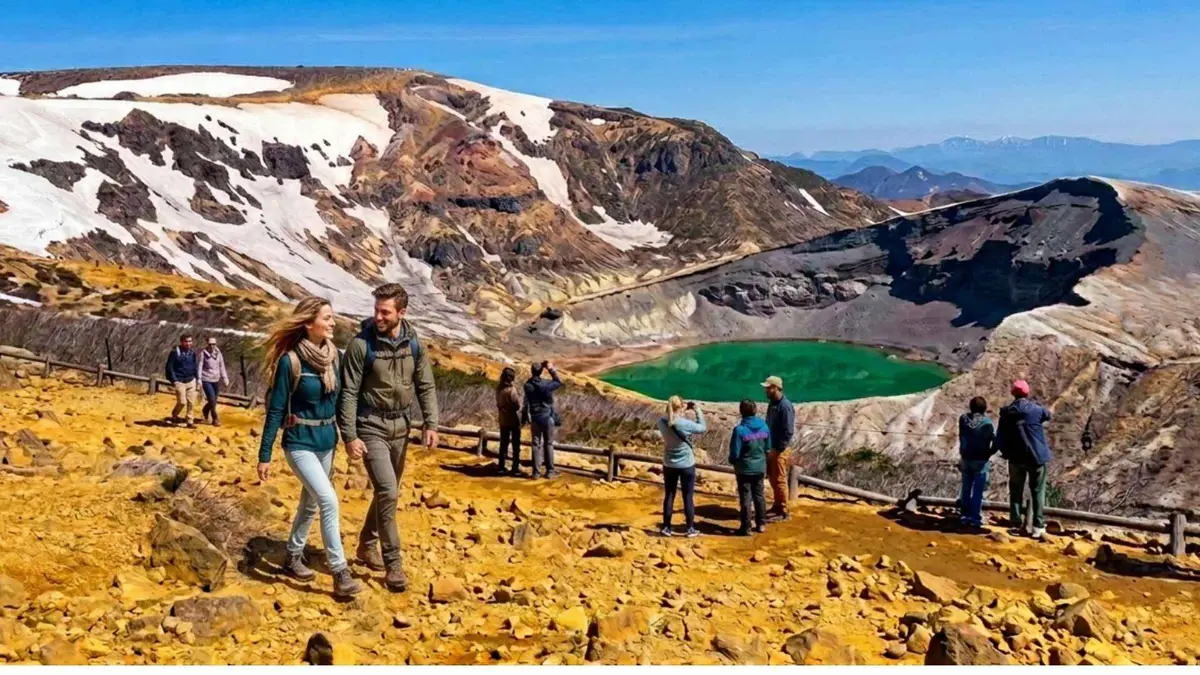
Ginzan Onsen, Zao Ropeway and Okama Crater Tour with Lunch
An 11-hour winter-and-summer combo covering Ginzan Onsen, lunch in Yamagata and the Zao Ropeway, with Okama Crater on warm-season departures.
- Cancellation
- Free cancellation 24h
- Operator
- LION TRAVEL JAPAN Co. Ltd.
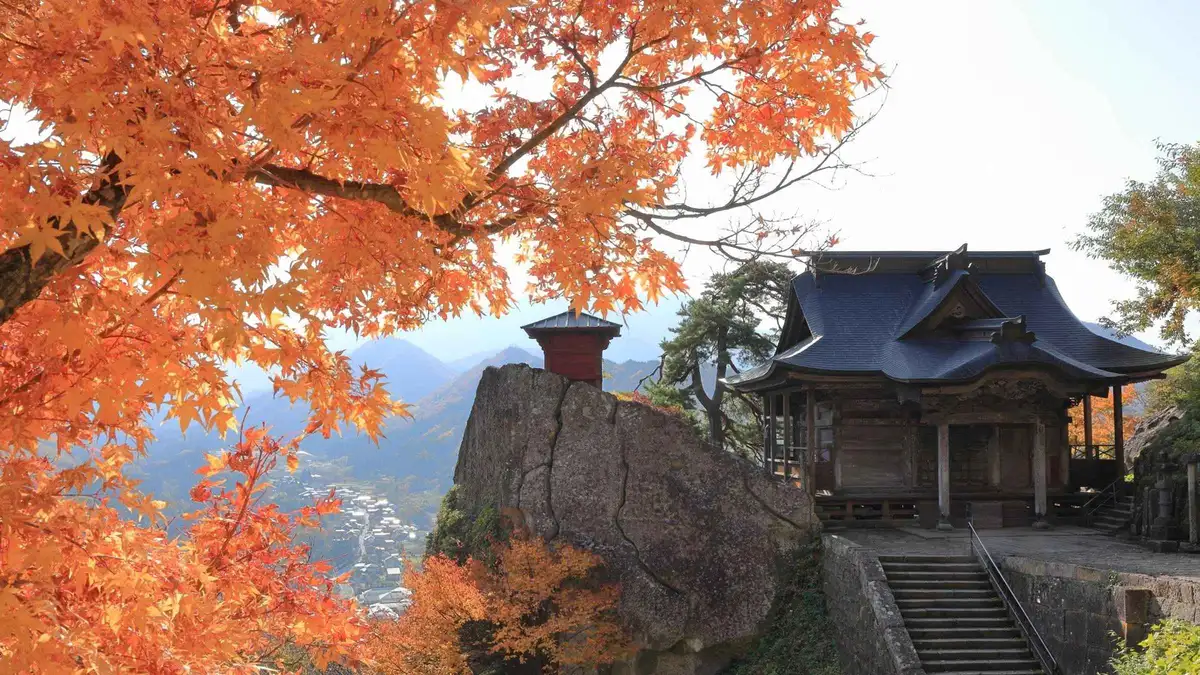
Day Tour: Sendai Daikannon Statue & Yamadera Temple
A 7-hour English small group day trip by public bus and train pairing the 100-meter Sendai Daikannon with the 1,015-step climb at Yamadera.
- Cancellation
- Free cancellation 24h
- Operator
- Machinovate Japan Ltd.
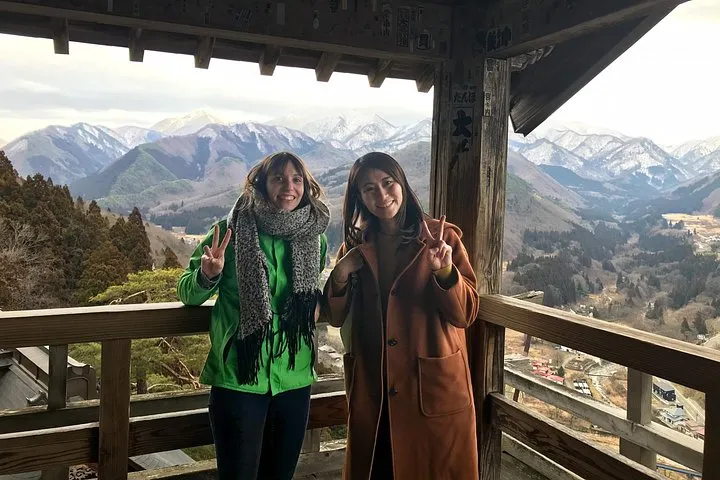
Yamadera Private Guided Tour from Sendai
A private licensed-guide visit to Yamadera with local stories, longer hiking trails on request, and pay-as-you-go train and entry fees.
- Cancellation
- Free cancellation 24h
- Operator
- Mai Sendai Tohoku tours
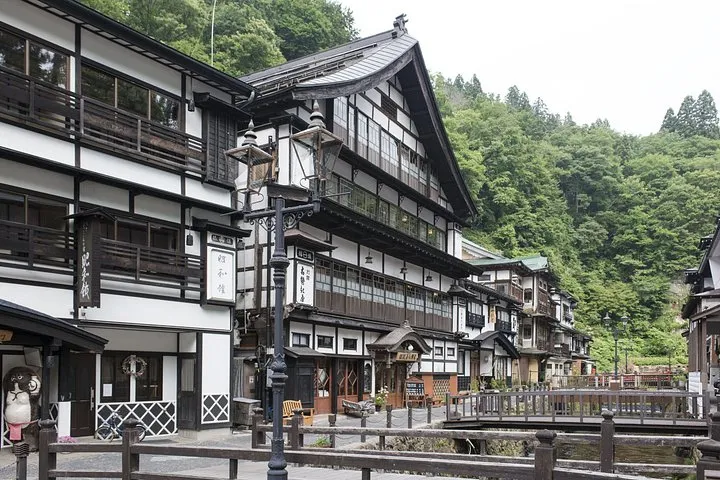
Full Day Yamagata Tour from Sendai: Yamadera and Ginzan Onsen
Small-group day trip pairing Yamadera's 1,015 temple steps with Ginzan Onsen, guided by JTB.
- Cancellation
- Free cancellation 24h
- Operator
- JTB Global Marketing & Travel Inc.
Is Yamadera worth visiting in winter, and how do you get there?
Yes, the cliff temple is quiet and beautiful in the snow, and it is 50 minutes from Sendai by the JR Senzan Line according to the Yamadera Tourist Association.
Yamadera is the simplest snow-season day trip from the city, with a short train ride and a walk that turns dramatic under snow.
Getting there
The Yamadera Tourist Association puts the ride on the JR Senzan Line at 50 minutes. The Matsushima tourism association's figure is about 60 minutes, or about 50 minutes on a rapid train, followed by about 7 minutes on foot from the station to the temple gate. Either way it is an easy morning trip.
The Sendai Marugoto Pass has its own model course from Sendai that covers Matsushima, Akiu Onsen and Yamadera.
Winter opening hours
Hours tighten in the cold months. From December to March the hours are 8:30 to 15:00, with the gate closing at 16:00, per the Yamadera Tourist Association. In the warmer season it is 8:00 entry until 16:00 and a 17:00 gate close. Winter closing can come earlier if weather turns, so go in the morning and leave slack in your plan.
The climb passes snow-covered pines and lookout points over the valley. Basho came here in 1689 and wrote his famous cicada haiku on this rock, a fact the association still celebrates. In winter the cicadas are gone but the silence he described is even deeper.
For a guided day that adds Sendai's giant Daikannon statue, see the Yamadera Tour from Sendai: Daikannon and Temple Day.
Sources: Yamadera Tourism Association, Matsushima Kanko Association, Sendai Travel Official Guide.
How do you visit Ginzan Onsen in winter?
You drive or bus to the Taisho Roman-kan car park and ride a reserved shuttle, because walking from Taisho Roman-kan into the village is forbidden in winter.
Ginzan Onsen is the most atmospheric snow scene in the region, but winter access has strict rules you should know before setting out.
The winter shuttle rule
Day visitors park at Taisho Roman-kan and ride a reserved shuttle into the village, and the walk from the car park is prohibited for the winter season, per the Ginzan Onsen official site. Book the shuttle in advance, especially for weekends and holiday periods.
Round-trip shuttle fares from Taisho Roman-kan in the winter season are published by the onsen as $6.36 (¥1,000) for departures from 9:00 to 11:00, $4.45 (¥700) from 11:00 to 14:00 and $7.63 (¥1,200) from 14:00 to 18:00 when booked ahead, rising to 1,300, 1,000 and $9.54 (¥1,500) on the day. Advance booking adds a $1.05 (¥165) system fee per booking.
Getting there from Sendai without a car
Public transport from Sendai goes by highway bus to Obanazawa or by rail to Oishida, then a local bus. In winter the last leg into the village is the reserved shuttle from Taisho Roman-kan.
Because of the connections, many travellers let someone else do the driving. The Ginzan Onsen Tour From Sendai: Zao Ropeway and Okama Crater pairs the village with the Zao highlands in one 11-hour day, and the Naruko Gorge Tour: H.I.S. Bus to Naruko and Ginzan Onsen runs a scheduled coach route.
Source: Ginzan Onsen.
What is there to do at Matsushima in winter?
Matsushima in winter means grilled oysters at the bayside shacks, which run from late October to mid March, plus boat cruises among the pine islands.
Matsushima is a year-round trip from Sendai, but winter adds the oyster season that food travellers plan around.
Oyster shack season
The shacks serve every oyster grilled rather than raw. The A-Course needs a reservation while the B-Course is first come first served, so decide which kind of traveller you are before you go. It is one of the classic winter lunches of the region, eaten in the cold air with the bay in front of you.
Close by, Harbour House Kaname near Matsushima Bay runs seaweed harvest tours where the picked wakame goes straight into a shabu-shabu on the boat. Further along the seasonal food trail, three spots around Sendai offer strawberry picking: Sunsunen Berry Planet, JR Fruit Park Sendai Arahama and Ichigo Ichie Matsumori Farm.
Tours and transport
A bay cruise works in any season. The Matsushima Bay Cruise Tour From Sendai runs 8 hours with free cancellation up to a day before. If you want the history and the oysters together, the Matsushima Oyster Tour: Private Samurai and Temples Day builds the season's best lunch into a private itinerary.
What is Sendai like in winter?
Sendai in winter is a cold but manageable city, with snowy streets on the days it does fall, hot springs, and comforting local food.
The city is the warm-up act for the mountain trips, and it holds its own as a winter destination.
Weather and what to pack
Pack a down jacket and heat-tech layers, per LIVE JAPAN's winter guide. The city gets less snow than the mountains, and the streets stay walkable most days, but a good pair of grip soles earns its place on any day trip.
Within the city, the Loople Sendai loop bus connects the main sights. Sentabi, the city's tourism site, sells one-day passes for the loop bus and the subway.
Does Sendai get snow?
It does, though the city sees modest falls compared with the Zao range and the Yamagata interior. Snowy city streets are part of the winter picture here, and the deep accumulations you chase on day trips sit in the mountains an hour or two away. That split is exactly what makes the city a good base.
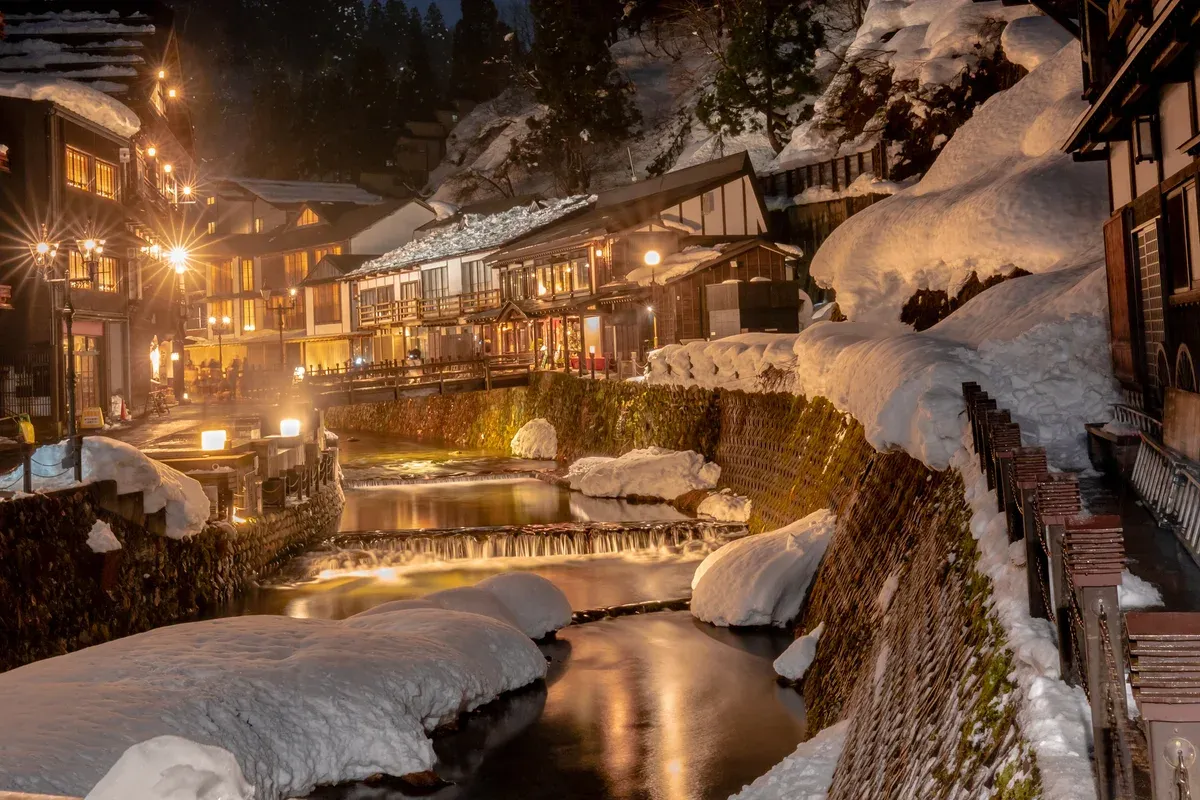
Ginzan Onsen river in winter. Photo: Koichi_Hayakawa, CC BY 4.0, via Wikimedia Commons
What winter events and illuminations happen in Sendai?
The season brings some 400,000 lights along Jozenji-dori Avenue from early December to December 31, the Bright-Nights STORY display from mid-January through February and the Dontosai fire festival in mid-January.
Sendai's winter calendar keeps the evenings lively between day trips.
Lights and fire
Jozenji-dori Avenue glows with some 400,000 lights from early December through December 31, and the SENDAI Bright-Nights STORY display picks up from mid-January through February around the same avenue. Walk it after dark when you get back from the mountains.
Dontosai at Osaki Hachimangu Shrine has over 300 years of history and is held on 14 January.
If you would rather end a cold day in hot water, the Sendai and Matsushima Tour With a Licensed Guide can be shaped toward the city sights that pair well with an evening at Akiu Onsen.
Why is Sendai famous?
Sendai is famous as the largest city in Tohoku, the seat of the Date samurai clan, home of Osaki Hachimangu Shrine and the gateway to Matsushima, Zao and the region's hot springs.
The city earns its place on the map with history, food and the strongest transport links in northern Japan.
The city and its gateway role
Sendai anchors the Tohoku rail network, which is why every winter itinerary here starts from its station. The Shinkansen puts it a short ride from Tokyo, and from the city you reach the snow monsters, Ginzan Onsen, Yamadera and Matsushima in a single day each.
In winter the fame extends to the table: grilled oysters at Matsushima and strawberry picking around Sendai. Add the illuminations and the fire festival and the city justifies more than a stopover.
For ideas beyond the winter classics, the Geibikei Gorge Tour from Sendai: Boat Ride, Chusonji and Hiraizumi heads into Iwate's World Heritage temples, and the Zao Fox Village Tour from Sendai adds foxes to the snow.
Which part of Japan is best for winter?
For snow scenery, Tohoku around Sendai is one of the best parts of Japan for winter, with snow monsters and snowbound onsen villages.
Japan's winter divide runs between the heavy-snow north and the milder Pacific side, and Sendai sits right on the useful line between them.
Why base yourself here
From one hotel you can reach a rime forest, a gas-lit onsen village and a cliff temple, all within a day's return. Few places pack this variety of winter scenes into single-day trips.
The city's own infrastructure helps. Winter sports fans can reach Izumigatake Ski Resort, a 50-minute drive from the city center, which usually opens late December and runs to March with wide slopes for beginners. City culture, hot springs and mountain snow all sit within the same base.
What timing tips make winter day trips from Sendai work?
Start early, book the Ginzan shuttle and any guided tour ahead, and plan around shortened winter hours at Yamadera and early sunsets.
Winter compresses the day. A few habits keep the trips comfortable.
Practical winter timing
Yamadera's winter hours run 8:30 to 15:00 and the gate closes at 16:00, and closing can come earlier in bad weather, so catch a morning train. The Ginzan shuttle sells by departure window, and the onsen's own site urges advance booking, so reserve before you travel.
Days end early, so pair a mountain morning with a city evening. The illuminations on Jozenji-dori Avenue and a warm dinner fit neatly after an afternoon return. Guided tours remove the tightest connections entirely, which matters most when snow slows the roads.
If you want both headline destinations handled in one long day, the Yamadera and Ginzan Onsen Tour From Sendai runs nearly 13 hours and covers the pair.
Sources: Yamadera Tourism Association, Ginzan Onsen.
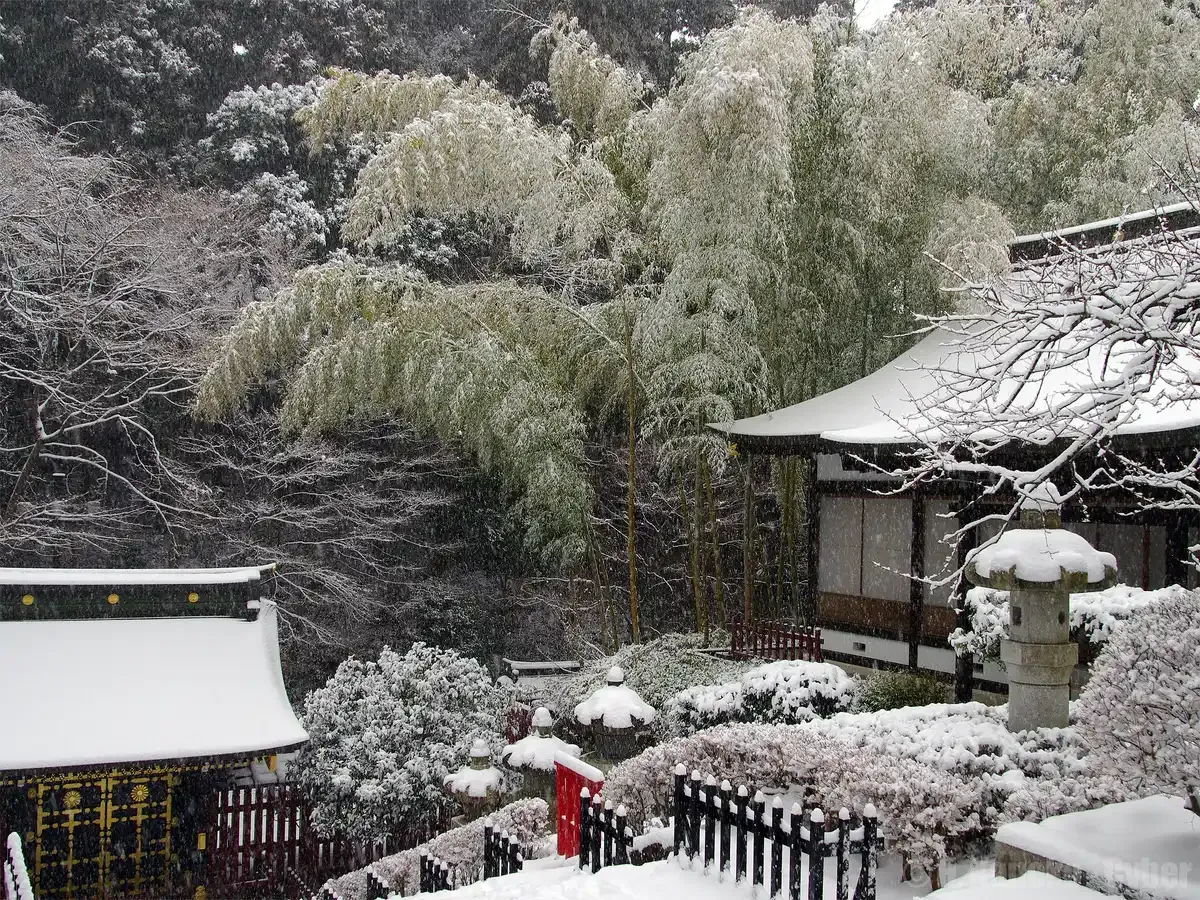
Zuihoden grounds under snow. Photo: Hiroaki Kaneko, CC BY-SA 3.0, via Wikimedia Commons
Winter day trip questions
Does it snow in Sendai in December?
Falls are possible but usually light in the city, and the deep snow you want for Zao and Ginzan builds later in the season. The Jozenji-dori Avenue illuminations make early December worth a trip on their own, with some 400,000 lights from early December to December 31.
How do I get to Sendai in winter?
The Shinkansen is the standard route from Tokyo and and the city's station is the hub for the Senzan Line to Yamadera and the buses toward Zao and Ginzan. Snow delays are possible in the mountains, so allow slack on departure days.
Is Ginzan Onsen open to day visitors in winter?
Yes, but you must park at Taisho Roman-kan and take the reserved shuttle, since walking into the village is forbidden in winter. Book ahead, because the advance fare also saves you money compared with paying on the day.
What should I pack for Sendai in winter?
A down jacket and heat-tech layers, plus grip-soled shoes for icy temple paths and a spare battery, as cold drains phone power fast.
Can I do Yamadera and Ginzan Onsen in one day?
Yes, with a full-day guided tour or an early start by car. Public transport connections make it tight, so the Yamadera and Ginzan Onsen Tour From Sendai is the low-effort way to combine them.
When is oyster season in Matsushima?
The bayside shacks run from late October to mid March, serving all oysters grilled rather than raw. The A-Course needs a reservation and the B-Course is first come first served.
More Guides
- Is Sendai Worth Visiting?
The 2027 verdict on Sendai: worth 2 to 3 days as a base for Matsushima, Yamadera and Ginzan Onsen. See who it suits and how to plan it.
- Where to Stay for Sendai Day Trips
Where to stay in Sendai 2027: Sendai Station, Matsushima, Akiu Onsen and more, with train times and day trip pairings. Plan your base now.
- How to Get to Ginzan Onsen from Sendai
Bus, train and winter shuttle routes from Sendai to Ginzan Onsen for 2027, with times and a day plan. Compare both ways before you go.